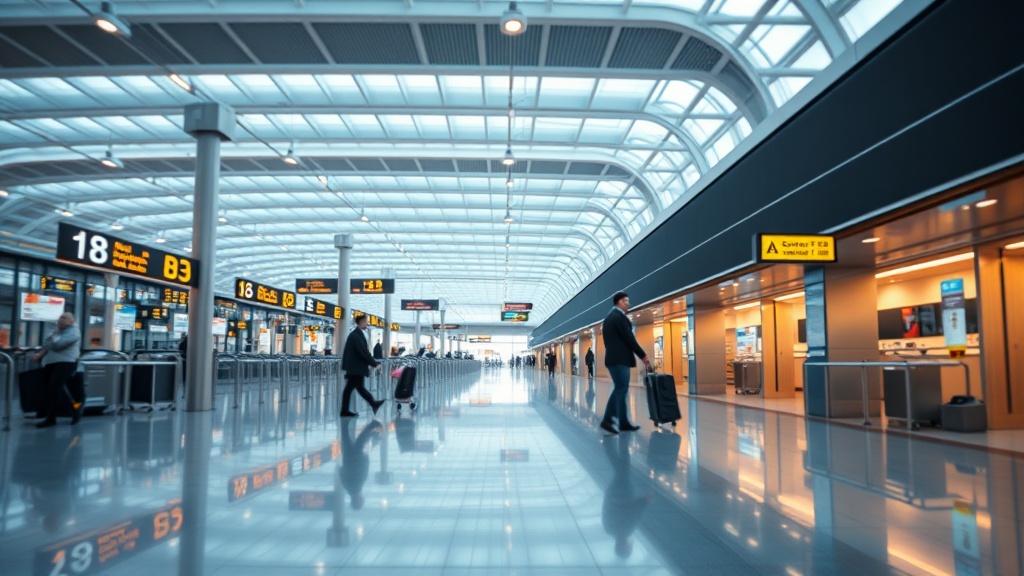
Amsterdam Airport Schiphol consistently ranks among Europe’s most congested transit hubs, processing tens of millions of passengers annually through a security infrastructure that, without careful management, can devolve into unpredictable bottlenecks. Yet for the informed traveler, Schiphol has introduced a genuinely forward-thinking solution: a security time slot reservation system that allows departing passengers to pre-schedule their exact entry into the security screening area. This is not a premium upsell or an airline perk — it is a free, publicly accessible demand-management tool that fundamentally changes how you should plan your departure. Whether you are catching an early morning business flight or navigating the chaos of a peak holiday season, understanding how this system works in practice — not just in theory — is essential logistics intelligence for the modern international traveler.
What Is the Schiphol Security Time Slot System?
Amsterdam Airport Schiphol offers a free, official service that lets departing passengers reserve a dedicated time window for entering the security checkpoint, available for both Schengen and non-Schengen flights to reduce unpredictable queue times across the terminal.
At its core, the Schiphol security time slot is a digital reservation that converts your security experience from a random-arrival queuing gamble into a scheduled, operationally predictable event. The system is available to all departing passengers regardless of destination zone. Whether you are flying within the Schengen Area to Berlin or Frankfurt, or heading on a long-haul non-Schengen route to New York or Singapore, the service is open to you at no charge.
From a logistics standpoint, this represents a textbook application of demand leveling — a strategy borrowed directly from supply chain management. Rather than allowing passenger arrivals to cluster chaotically around flight departure times, Schiphol distributes the human load across the morning or afternoon in controlled increments. The result is a more fluid operation for the airport and, critically, a more predictable experience for the traveler. According to Amsterdam Airport Schiphol’s operational profile on Wikipedia, AMS is one of Europe’s four major hub airports, handling over 60 million passengers per year before the pandemic — a volume that makes tools like this not merely convenient but operationally necessary.
It is equally important to understand what this system is not. The time slot reservation applies strictly to the security checkpoint entry point. It does not replace or integrate with your airline’s check-in process, and it has no bearing on passport control or border formalities for non-Schengen travelers. Those remain entirely separate queues requiring their own time allocation in your departure plan.
How to Book Your Security Time Slot: Step-by-Step Reality
Passengers can reserve a Schiphol security time slot starting 72 hours (three days) before their scheduled departure, receiving a QR code by email that must be scanned at a dedicated “Time Slot” lane entry point at the security hall.
The booking window opens precisely 72 hours before your flight’s scheduled departure time. This is a critical logistical detail that many travelers overlook. If your flight departs at 08:00 on a Thursday, you can begin the reservation process at 08:00 on Monday — not before. Attempting to book earlier will simply return no available slots for your flight date.
The process itself is executed through Schiphol’s official website or mobile platform. You enter your flight details, select an available time window that aligns with your departure schedule, and confirm. The system then generates a unique QR code that is dispatched to your registered email address. This QR code is your physical key to the dedicated time slot lane — a clearly marked entry point separated from the standard general queue at the security hall entrance.
Upon arrival at the terminal, you navigate to the designated “Time Slot” entry point, present your QR code for scanning, and proceed into the filtered lane. The operational mechanics are clean, digital, and paperless — aligning with the broader industry trend toward mobile-first airport experiences that logistics professionals and smart travel logistics practitioners have been advocating for years.
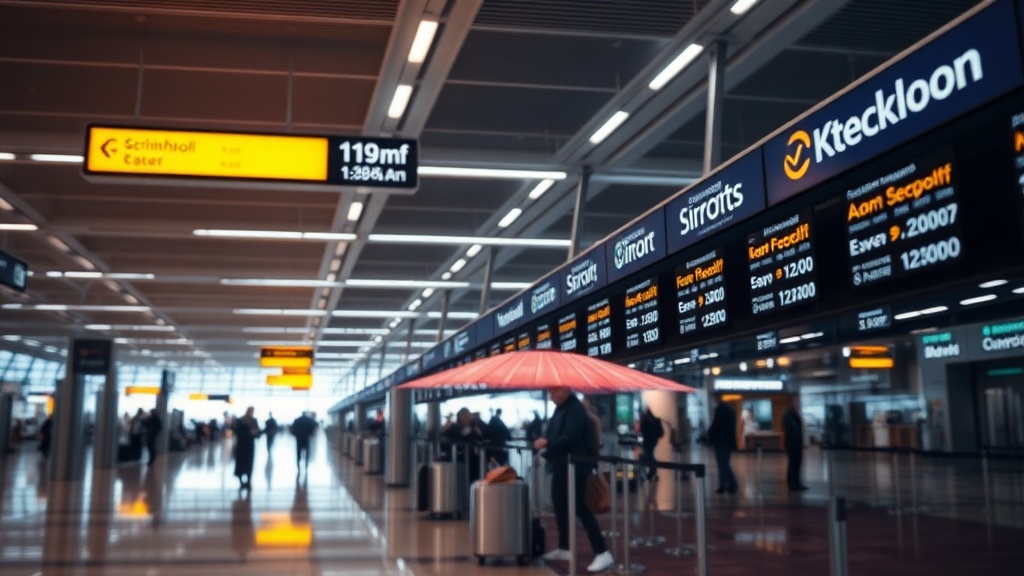
One feature that demands particular attention is the 15-minute arrival window. Your booked slot is not a loose guideline — it is a defined operational parameter. Arriving significantly before your window opens or after it closes creates a problem: the scanning system at the dedicated lane will not validate your QR code outside of its assigned window, and you will be redirected to the standard general queue. The efficiency advantage you planned for evaporates entirely. Precision, in this context, is not optional.
The 15-Minute Window: The Most Misunderstood Element
The time slot system grants a strict 15-minute entry window; arriving too early or too late forfeits your reserved access and routes you back to the standard queue, making precise airport arrival timing non-negotiable for slot holders.
In practical field experience, the 15-minute window is simultaneously the system’s greatest strength and its most common point of failure for unprepared travelers. The strength lies in its precision: it enforces the demand-leveling logic that makes the entire system function. If passengers could show up at any time with their QR code, the dedicated lane would simply become another unmanaged queue, defeating the purpose entirely.
The failure point emerges when travelers treat the slot booking as a safety net rather than a scheduling commitment. Consider a common scenario: a traveler books a 07:15–07:30 entry slot but arrives at the terminal at 07:05 due to an earlier-than-expected taxi. They proceed to the time slot lane immediately, their QR code scans as invalid — too early — and they are directed to the standard queue, which at 07:05 on a Monday morning may already be substantial. The solution is straightforward but requires deliberate planning: calibrate your terminal arrival time to land you at the security hall entrance within your window, accounting for the time required to check luggage, reach the correct terminal hall, and locate the time slot entry point.
“Predictability is the most valuable currency in high-volume airport operations. Any system that converts stochastic passenger arrivals into scheduled flow is, by definition, a force multiplier for operational efficiency.”
— Operational Airport Management Principle, IATA Ground Operations Manual Framework
It is also worth noting clearly that holding a time slot does not mean you bypass security screening itself. Once inside the dedicated lane, you remain subject to the full standard security procedure — removal of liquids, electronics, belts, and shoes as applicable, X-ray screening of carry-on luggage, and body scanner or metal detector passage. The slot guarantees entry into a faster-moving, less congested lane; it does not constitute a security exemption of any kind. Short delays can and do occur even within the time slot lane, particularly if a bag ahead of you triggers a secondary inspection.
Strategic Advantages for Schengen vs. Non-Schengen Travelers
Non-Schengen travelers gain the most strategic value from time slot booking, as clearing security predictably provides a reliable buffer before the additional passport control queue, enabling precise total pre-departure time management.
For travelers departing to destinations within the Schengen Zone, the time slot system simplifies the departure sequence to its essentials: check in, drop bags, clear security on schedule, reach the gate. The entire process becomes a matter of executing a pre-planned timeline with minimal variance.
For non-Schengen travelers — those heading to the United Kingdom, United States, Asia, or any destination outside Europe’s open-border area — the strategic calculus is more nuanced. After clearing the security checkpoint, these passengers must also navigate a separate passport control queue before reaching their departure gate. This second queue introduces an additional layer of timing uncertainty. By removing the unpredictability of security with a reserved time slot, the traveler establishes a known checkpoint in their timeline from which to project their passport control arrival and, ultimately, their gate arrival.
- Schengen Travelers: Use the slot to guarantee a clean, fast path from the terminal entrance to the departure lounge. Allow 20–30 minutes post-slot for the screening process itself and the walk to your gate.
- Non-Schengen Travelers: Budget an additional 20–45 minutes beyond your security slot time for passport control queues, which can vary significantly by time of day and season. The slot does not control this variable, but it ensures you arrive at passport control at a known, planned time.
- All Travelers with Checked Luggage: Factor in a mandatory 30–45 minutes before your security slot time for bag drop at your airline’s check-in counter. Sequence your day as: arrive at terminal → bag drop → move to security hall → enter at your slot time.
The system’s value is most dramatically visible during peak travel periods — early morning bank of departures between 06:00 and 09:00, the Friday evening departure surge, and holiday season peaks around school breaks and major public holidays. During these windows, standard security queues at Schiphol can extend to 45 minutes or longer. The time slot lane, by contrast, maintains a controlled flow that typically resolves within 10–20 minutes from entry, including the physical screening process.
Practical Logistics Checklist for Slot Holders
Maximizing the Schiphol time slot system requires integrating it into a sequenced departure plan that accounts for check-in, bag drop, terminal navigation, and the strict 15-minute entry window as distinct, scheduled steps.
Drawing on professional travel logistics methodology, the following structured approach will consistently yield optimal results when using the Schiphol security time slot system:
- Book at the 72-hour mark: Slot availability is finite. Popular morning departure windows fill up quickly, particularly during peak seasons. Set a calendar reminder for exactly 72 hours before your flight’s scheduled departure and complete the booking promptly.
- Confirm your QR code delivery: Check your email immediately after booking. Ensure the QR code renders correctly on your mobile device and add it to your phone’s wallet or screenshot it in case of connectivity issues at the terminal.
- Sequence your terminal arrival: Work backwards from your security slot time. If your slot is 07:15, you should be at the check-in/bag drop counter no later than 06:30, and walking toward the security hall no later than 07:05.
- Locate the Time Slot lane in advance: Review Schiphol’s terminal map before your trip. The dedicated time slot entry point is a specific physical location within the security hall — knowing its position prevents last-minute confusion that could cost you your window.
- Do not over-rely on the slot alone: The time slot manages your security entry. It does not account for passport control, gate changes, long terminal walks to remote piers, or airline boarding cut-off times. Maintain a minimum of 30 minutes of buffer beyond your security exit time for all subsequent departure steps.
- Plan for the 15-minute window, not against it: Your goal is to be at the time slot lane entrance approximately 5 minutes before your window opens — ready to enter the moment it becomes valid.
As a certified IATA International Travel Professional, my consistent field-tested recommendation is to treat the Schiphol security time slot as a foundational scheduling anchor in your departure plan, not an afterthought. Build your entire airport timeline around it — from hotel checkout to gate arrival — and the system delivers exactly what it promises: a predictable, controlled, and stress-minimized departure experience from one of the world’s most complex aviation hubs.
Frequently Asked Questions
Is the Schiphol security time slot service free to use for all passengers?
Yes. The security time slot reservation service at Amsterdam Airport Schiphol is completely free of charge for all departing passengers. Unlike fast-track or priority lane services offered at many other major airports, which typically carry a fee ranging from €5 to €15 or more, Schiphol’s system requires no payment and no airline status — any passenger with a valid departure flight can book a slot through the official Schiphol website or app starting 72 hours before their scheduled departure.
What happens if I arrive outside my 15-minute security slot window?
If you arrive at the dedicated Time Slot security lane either before or after your reserved 15-minute window, your QR code will not be validated by the entry scanner and you will be directed to the standard general security queue. There is no override or grace period for early or late arrivals. This is by design — the strict window enforcement is what maintains the lane’s controlled passenger flow. If you miss your window, your only option is to join the regular queue, potentially losing the efficiency advantage you planned for. Precise terminal arrival timing is therefore non-negotiable for slot holders.
Does the time slot cover passport control or airline check-in at Schiphol?
No. The Schiphol security time slot system applies exclusively to the security checkpoint entry lane. It has no connection to, and does not replace, your airline’s check-in and bag drop process, which must be completed separately before you proceed to security. Similarly, for non-Schengen travelers, the time slot does not cover passport control, which is a separate queue encountered after security clearance. Travelers must allocate independent time for both check-in and, where applicable, border passport control, in addition to their reserved security slot time.