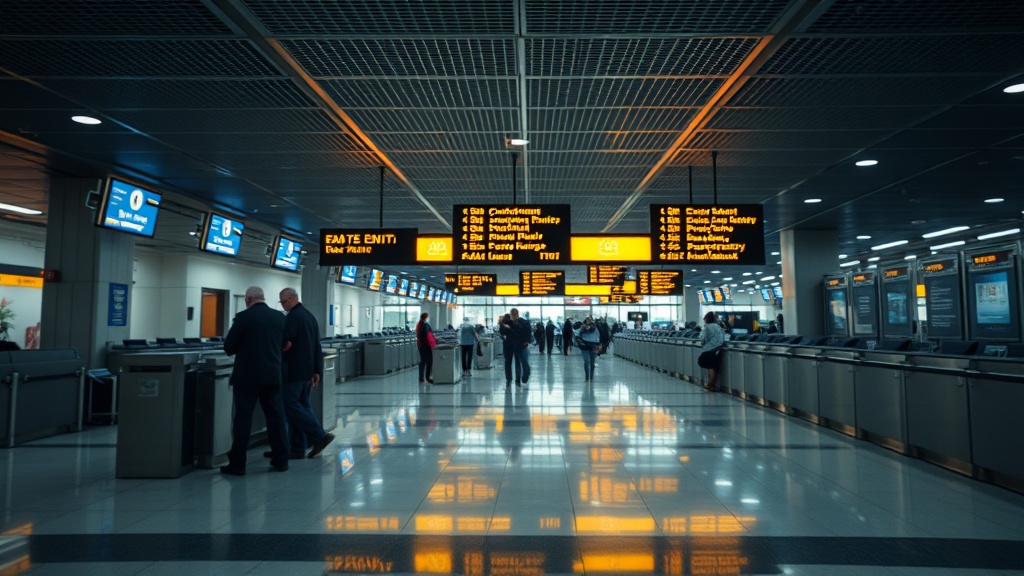
LAX TBIT Customs and Border Protection Global Entry Kiosk Errors: What’s Actually Happening and How to Fix It
It’s 11:47 PM. You’ve just landed at LAX Terminal B — the Tom Bradley International Terminal — after 14 hours in the air. You’re a Global Entry member, you’ve paid $100 for the privilege, and the kiosk just spit out a red slip instead of letting you through. The CBP officer waves you into the secondary line, which is 40 people deep. This is not a hypothetical. This happens at TBIT more than CBP’s official communications let on, and the reasons behind it are almost never explained to the traveler standing there exhausted at midnight.
I’ve processed corporate travelers through LAX TBIT hundreds of times across my logistics career, and the Global Entry kiosk error pattern at this specific terminal has a distinct fingerprint. The failure modes at TBIT aren’t random — they’re systemic, and if you know what’s actually triggering them, you can dramatically cut your processing time and avoid the secondary inspection queue entirely.
Why TBIT at LAX Has a Disproportionate Global Entry Kiosk Error Rate
LAX TBIT processes more international arrivals than any other single terminal in the Western United States, and that volume directly strains the biometric and database infrastructure CBP runs on-site.
The Tom Bradley International Terminal is not just large — it’s architecturally complex, having undergone a $1.9 billion modernization project that was formally reviewed under the Los Angeles World Airports Final EIR for the Bradley West Project. That renovation created a situation where new kiosk hardware was layered onto legacy data routing systems. From a systems perspective, you end up with a mismatch between processing speed at the kiosk and the latency on the back-end identity verification database that kiosk is pinging.
Under the hood, every Global Entry kiosk at TBIT is simultaneously querying multiple federal databases: the Advance Passenger Information System (APIS), the Automated Targeting System (ATS), and the identity records within the Trusted Traveler Programs network. When high-volume international flights arrive in clusters — which is the normal TBIT pattern between 9 PM and 2 AM — database query latency spikes. The kiosk interprets a timeout not as a network issue, but as an identity verification failure. That triggers an error code and routes you to secondary.
No one in the general travel blog space talks about this distinction. They tell you to “make sure your passport isn’t damaged.” That advice addresses maybe 5% of TBIT kiosk errors.
The Six Most Common LAX TBIT Global Entry Kiosk Error Triggers
Most kiosk errors at TBIT fall into predictable categories — and at least four of them are preventable before you ever step off the plane.
The first and most common trigger is biometric drift. If you enrolled in Global Entry more than three years ago and haven’t had your fingerprints re-scanned during a renewal interaction, the system’s confidence score on your fingerprint match degrades over time. TBIT’s kiosks are calibrated to a slightly stricter threshold than some smaller ports of entry, likely because of its high-volume fraud risk profile. You’ll get an error that looks generic but is actually a low biometric confidence score.
The second major trigger is passport chip read failures. The RFID chips embedded in modern passports are more fragile than TSA wants to admit. Wallet pressure, proximity to magnetic strips, and even extended heat exposure can degrade chip performance without visibly damaging the passport. The kiosk reader at TBIT attempts the chip read first — if it fails, the fallback to optical character recognition sometimes doesn’t complete properly, generating an error.
Third: name mismatches between your Global Entry profile and your current passport. This is a silent killer for frequent travelers who got married, changed names legally, or renewed a passport without updating their Trusted Traveler Programs profile through the CBP Trusted Traveler Programs portal. The system doesn’t tell you this is the problem. It just errors out.
Fourth is travel history anomalies flagged by ATS. If your itinerary routed through a country with elevated screening flags and your travel pattern is unusual relative to your profile baseline, the automated risk system quietly downgrades your trusted status for that entry. You won’t know this happened. The kiosk error is the first signal you get.
Fifth: account expiration within 30 days. Global Entry doesn’t send aggressive renewal reminders. If your membership lapsed or is within the final 30-day window, some TBIT kiosks will error you out even though the CBP official Global Entry program page technically allows continued use through the expiration date.
Sixth, and this one is purely operational: kiosk hardware faults during peak hours. Thermal throttling on older units, paper receipt jams that corrupt the session state, touchscreen calibration drift. These are equipment issues. They have nothing to do with you. But you still end up in secondary.
What to Do in Real-Time When the Kiosk Errors at TBIT
Your first 90 seconds after a kiosk error determine whether you spend 12 minutes or 90 minutes in the arrivals hall.
Do not immediately join the secondary inspection queue. First, look for a CBP officer stationed near the kiosk bank — there’s usually one within 20 feet at TBIT. Show them your red slip and ask specifically whether the error is a “system referral” or a “manual review referral.” That distinction matters. A system referral often means a CBP officer can override the kiosk routing and process you at a staffed primary lane, especially during high-volume periods when they’re trying to keep throughput moving.
The failure mode here is that most travelers assume the red slip is final and self-direct to secondary. That assumption costs you 30 to 60 minutes. Officers have discretion. Use it.
If you’re a frequent TBIT user — monthly or more — I recommend keeping a screenshot of your TTP membership confirmation on your phone with the expiration date clearly visible. Officers can verify this faster than pulling your record in the system. It’s a small thing that consistently shortens interactions at primary during high-error periods.
For corporate travel managers reading this: build a standard operating procedure for your road warriors that includes checking TTP profile accuracy — name, passport number, expiration date — 72 hours before each international return. This is the single highest-ROI action for reducing secondary inspection delays at TBIT specifically. The cost is three minutes of admin time. The savings can be hours.
The Honest Critique: Stop Telling People to “Arrive Early” as the Fix
The most recycled advice for Global Entry kiosk problems — arrive early, join the line faster — fundamentally misunderstands what causes errors and what actually resolves them.
Every major travel site recommends arriving early as a buffer for Global Entry issues. This advice is wrong in a specific way that reveals how little the writers understand about TBIT operations. Arriving early doesn’t prevent kiosk errors. It doesn’t resolve biometric drift. It doesn’t fix a degraded passport chip. It doesn’t update your TTP profile. All it does is give you more time to stand in the same secondary inspection line you could have avoided entirely with correct pre-travel account hygiene.
The tradeoff is real: the five minutes you spend verifying your Global Entry profile before departure does more work than arriving 45 minutes early. One is prevention. The other is just adding buffer to a broken process. If you want actionable guidance on building this kind of systematic pre-travel protocol, the frameworks I use with corporate clients are covered in detail across smart travel logistics guides built specifically for high-frequency international travelers.
Summary Table: LAX TBIT Global Entry Kiosk Error Types and Solutions
| Error Trigger | Who It Affects Most | Prevention | Real-Time Fix |
|---|---|---|---|
| Biometric drift | Members enrolled 3+ years ago | Schedule renewal interview before expiry | Request officer-assisted primary lane |
| Passport chip failure | Heavy wallet users, older passports | Store passport in RFID sleeve | Officer manual processing |
| Name/profile mismatch | Recent name changes, new passports | Update TTP profile 72 hrs pre-departure | Secondary review (unavoidable) |
| ATS travel flag | Travelers via high-risk transit countries | Limited; routing changes can help | Cooperate fully; flag resolves in secondary |
| Membership near expiry | Anyone in final 30-day window | Renew 60 days before expiration | Show membership screenshot to officer |
| Hardware/system fault | All travelers during peak hours | Use kiosks at less congested banks | Move to adjacent kiosk immediately |
What most travelers never realize is that the kiosk error itself is not the CBP’s final judgment on you — it’s a machine timeout or a data mismatch, and human officers have more flexibility than the system implies. The whole Global Entry promise is actually intact. The execution at TBIT just has specific, fixable failure points that the program’s marketing conveniently omits.
Frequently Asked Questions
Does a Global Entry kiosk error at LAX TBIT mean my membership is revoked?
No. A kiosk error is a processing failure, not a revocation. Your membership remains active. Revocation is a separate administrative process initiated by CBP and communicated via your TTP account. If you received a red slip, you were routed to secondary for manual review — your Global Entry status was temporarily bypassed, not terminated.
How do I find out why I received a kiosk error at TBIT?
CBP officers in secondary processing are not obligated to disclose the specific error code. However, you can submit a DHS TRIP (Traveler Redress Inquiry Program) inquiry after the fact if you believe the error was erroneous or recurring. For profile-related issues, logging into your TTP account will often reveal flags such as expired membership or profile mismatches that explain the routing.
Can I switch kiosks if one errors out at LAX TBIT?
Yes — and this is an underused option. If the error is hardware-related (receipt paper jam, touchscreen fault, chip reader malfunction), moving to an adjacent kiosk in a different bank often resolves it immediately. Ask the nearby CBP officer before joining any queue. Officers on the floor can tell you whether a specific kiosk unit is flagged as problematic on their end.
References
- U.S. Customs and Border Protection — Global Entry Program: https://www.cbp.gov/travel/trusted-traveler-programs/global-entry
- CBP Trusted Traveler Programs Portal (TTP): https://ttp.cbp.dhs.gov
- Los Angeles World Airports — LAX Bradley West Project EIR: https://www.lawa.org
- DHS Traveler Redress Inquiry Program (TRIP): https://www.dhs.gov/dhs-trip