Executive Summary
Navigating a layover in Doha demands strategic planning, particularly around rest. This professional guide examines Hamad International Airport quiet rooms actual availability at 2 AM and delivers verified logistics insights for transit passengers.
- Complimentary Quiet Rooms exist in Concourses A through E but reach full capacity rapidly during the 2 AM peak wave.
- The early morning window (11 PM–3 AM) is DOH’s busiest transfer period, driven by converging long-haul flights from Europe, Africa, and Asia.
- Paid alternatives — including Sleep ‘n Fly pods, the Oryx Airport Hotel, and premium lounges — offer far more reliable rest guarantees.
Understanding Hamad International Airport’s Quiet Room Infrastructure
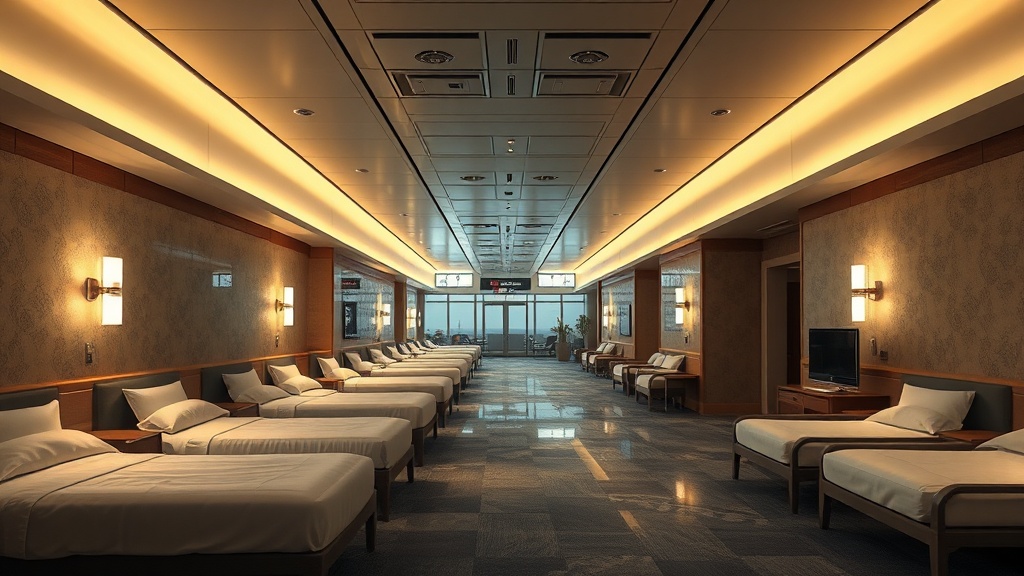
Hamad International Airport (DOH) provides complimentary Quiet Rooms fitted with semi-reclined lounge chairs, distributed across Concourses A, B, C, D, and E. These gender-segregated spaces serve as the airport’s primary free rest solution for transit passengers on long layovers.
Quiet Rooms at Hamad International Airport are purpose-built, complimentary rest zones designed to give transit passengers a short-term reprieve from the terminal floor. Unlike standard seating areas, they feature semi-reclined lounge chairs in a dimly lit, lower-noise environment. Critically, these rooms are segregated by gender — with dedicated sections for men, women, and occasionally families — a design choice that reflects both local cultural norms and a genuine effort to improve passenger comfort. The rooms are spread strategically across all five main concourses (A, B, C, D, and E), theoretically distributing passenger flow across the terminal footprint.
However, the operative word is “theoretically.” From a global logistics standpoint, the physical distribution of these facilities is only as effective as the passenger volume allows, and at 2 AM, that volume is formidable. Understanding why requires examining the broader operational rhythm of DOH as a major international aviation hub connecting intercontinental routes.
Why 2 AM Is the Absolute Worst Time to Find a Quiet Room
The 2 AM window at DOH is classified as a “peak wave” period, when long-haul flights from Europe, Africa, and Asia converge simultaneously for connections, pushing Quiet Room occupancy to near 100% capacity and making availability essentially luck-based.
Seasoned logistics professionals and frequent flyers understand that an airport’s operational tempo is governed by wave banking — the strategic scheduling of flights in clusters to maximize connection opportunities. At Hamad International Airport, one of the most intense of these waves crashes between approximately 11 PM and 3 AM local time. During this window, aircraft from across Europe, sub-Saharan Africa, South Asia, and Southeast Asia arrive in rapid succession, depositing thousands of transit passengers into the terminal simultaneously.
“Peak transit waves at major hub airports can double or even triple the transient passenger population within a 90-minute window, fundamentally overwhelming any free, unbooked rest infrastructure.”
— General principle documented in aviation hub operations management literature
The practical consequence is stark: if you clear immigration or arrive at your gate connection at 2 AM, the Quiet Rooms in the primary concourses — particularly Concourses A and B, which serve the highest volume of Qatar Airways long-haul flights — are, in professional experience, operating at or near 100% capacity. Passengers who arrived 45 to 60 minutes before you have already claimed every semi-reclined chair. The further concourses, D and E, offer marginally better prospects, but the additional walking time (often 10–15 minutes from the core terminal) is a real cost when fatigue is already acute.
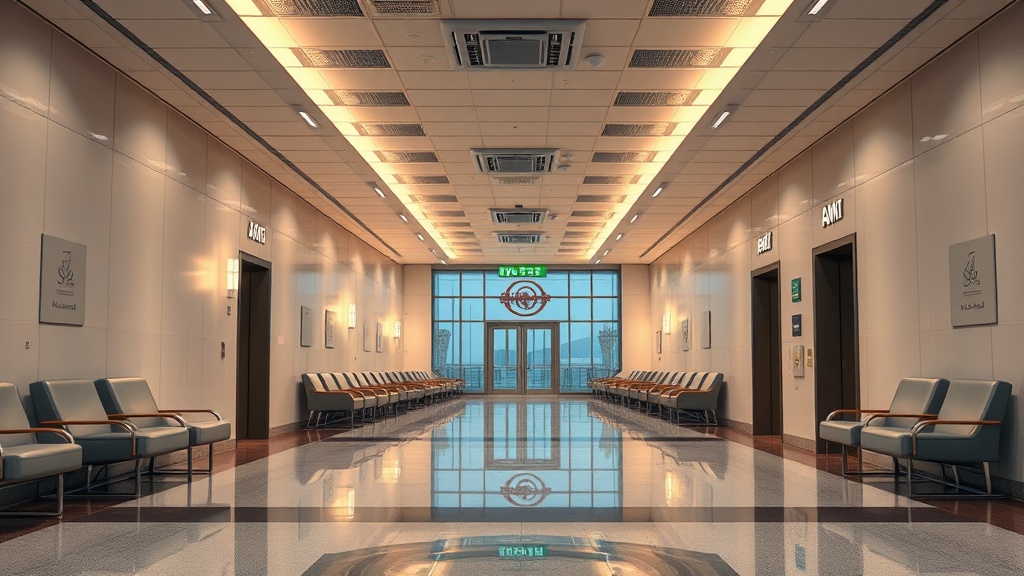
It is also worth noting what Quiet Rooms do not provide. There are no blankets, no pillows, no wake-up call services, and no staff monitoring for time limits. Passengers must bring their own travel gear — a neck pillow, eye mask, and a light layer are non-negotiable packing essentials for any DOH layover traveler. The absence of these amenities is not a shortcoming per se; it is a design philosophy that positions these rooms as basic rest zones rather than lounge products. For comprehensive strategies on managing layovers at major hubs, exploring resources on smart travel logistics can provide actionable frameworks beyond a single airport.
Professional Alternatives When Quiet Rooms Are Full
When Quiet Rooms are at capacity, transit passengers at DOH have three viable paid alternatives: Sleep ‘n Fly sleeping pods, the Oryx Airport Hotel for stays exceeding six hours, and premium airline lounges featuring day beds for eligible passengers.
A professional traveler never enters a high-volume hub like DOH without a contingency rest plan. The following options represent the established, reliable alternatives, ranked by cost and access complexity:
Sleep ‘n Fly Pods: The Hourly Recharge Option
The Sleep ‘n Fly lounge network operates private sleeping pods and cabins bookable by the hour, located near the C-Node intersection of the terminal. For a 2 AM arrival with a morning departure, a 3–4 hour pod booking is arguably the single most effective investment a fatigued traveler can make. Unlike the Quiet Rooms, availability can be checked and confirmed in advance, and the private cabin design eliminates ambient terminal noise entirely. This is the recommended solution for economy and premium economy passengers without lounge access.
Oryx Airport Hotel: Full-Service Rest for Long Layovers
For layovers exceeding six hours, the Oryx Airport Hotel — situated entirely within the transit zone, requiring no customs clearance — provides full hotel-standard accommodation. IATA-certified travel professionals consistently recommend this option for crew rest management and for passengers managing long-haul fatigue on multi-sector itineraries. The ability to shower, access room service, and sleep horizontally on a proper mattress produces meaningfully better recovery than any lounge product.
Premium Lounges: Al Mourjan and Al Safwa
Qatar Airways’ flagship Al Mourjan Business Lounge and the ultra-premium Al Safwa First Class Lounge both feature dedicated quiet zones and, critically, day beds. These facilities maintain significantly higher availability than the public Quiet Rooms even during peak wave periods, primarily because access is gated by business or first class ticketing, elite frequent flyer status, or a paid day pass. For eligible passengers, IATA-aligned airport operations standards recognize these facilities as best-in-class for passenger wellbeing during extended transits.
Quiet Rooms vs. Paid Alternatives: A Professional Comparison
The table below provides a direct, data-driven comparison of all rest options available at DOH during the 2 AM peak window, enabling travelers to make an informed, logistics-optimized decision.
| Rest Option | Cost | Availability at 2 AM | Amenities Provided | Best For |
|---|---|---|---|---|
| Quiet Rooms (Concourses A–E) | Free | Very Low (near 100% capacity) | Semi-reclined chair, dim lighting | Budget travelers, early arrivals |
| Sleep ‘n Fly (C-Node) | Paid (hourly rate) | Moderate (bookable in advance) | Private pod, Wi-Fi, power outlet | 2–5 hour layovers, economy passengers |
| Oryx Airport Hotel | Paid (room rate) | Good (pre-bookable) | Full hotel room, shower, room service | Layovers of 6+ hours |
| Al Mourjan / Al Safwa Lounges | Business/First class or paid access | Good (gated access reduces crowding) | Day beds, dining, showers, quiet zones | Premium ticket holders, elite status flyers |
Professional Tips: Maximizing Your Chances at DOH
Even during the 2 AM peak wave, a few evidence-based strategies can materially improve your chances of securing rest at Hamad International Airport without paying for premium services.
First, timing your approach to the Quiet Rooms matters enormously. If your flight lands at 1:30 AM, proceed directly to the furthest concourse (D or E) before settling near your departure gate. The volume of passengers gravitating toward the central concourses means outlying rooms, while less convenient, offer a measurably higher chance of vacancy. Second, carry all necessary personal rest gear in your carry-on: a compact travel pillow, ear plugs, an eye mask, and a lightweight shawl or thin blanket. The rooms provide zero amenity support, and passengers who arrive unprepared find the semi-reclined chairs significantly less restorative. Third, if you are traveling as a family unit, be aware that family-designated sections within Quiet Rooms are smaller and fill even faster than the standard gender-segregated areas — a pre-booked Sleep ‘n Fly family cabin is a far more sensible investment for group travel.
Finally, monitor Qatar Airways’ official app and the airport’s own wayfinding system for real-time crowding signals. While DOH does not publish a live Quiet Room capacity tracker, terminal staff at information desks near each concourse can provide current occupancy assessments on request.
FAQ
Are the Quiet Rooms at Hamad International Airport always free to use?
Yes, the Quiet Rooms across Concourses A, B, C, D, and E at Hamad International Airport (DOH) are entirely complimentary for all transit passengers regardless of airline or ticket class. No reservation system exists — access is first-come, first-served. However, this free access model is precisely why availability collapses during the 2 AM peak wave. Passengers who require guaranteed rest should treat the paid alternatives (Sleep ‘n Fly, Oryx Hotel, or lounge access) as the reliable default and the Quiet Rooms as an opportunistic bonus.
What should I bring to the DOH Quiet Rooms since no amenities are provided?
Since Quiet Rooms provide no blankets, pillows, or wake-up call services, packing your own rest kit is essential. A compact inflatable or memory foam neck pillow, a contoured sleep eye mask, quality foam or silicone ear plugs, and a lightweight pashmina or travel shawl constitute a complete, TSA-compliant rest kit that fits within any carry-on. Setting a phone alarm before resting is the only reliable wake-up mechanism available in these rooms.
Is the Sleep ‘n Fly lounge at DOH bookable in advance for the 2 AM period?
Yes. Sleep ‘n Fly at Hamad International Airport accepts advance bookings through their official website and the airport’s commercial partners. For the 2 AM peak window — particularly for Friday and Sunday arrivals when long-haul traffic is heaviest — advance booking 24–48 hours prior is strongly recommended. Walk-in availability during this period is not guaranteed. Pods and private cabins are bookable by the hour, making them a highly flexible option for layovers of varying durations.