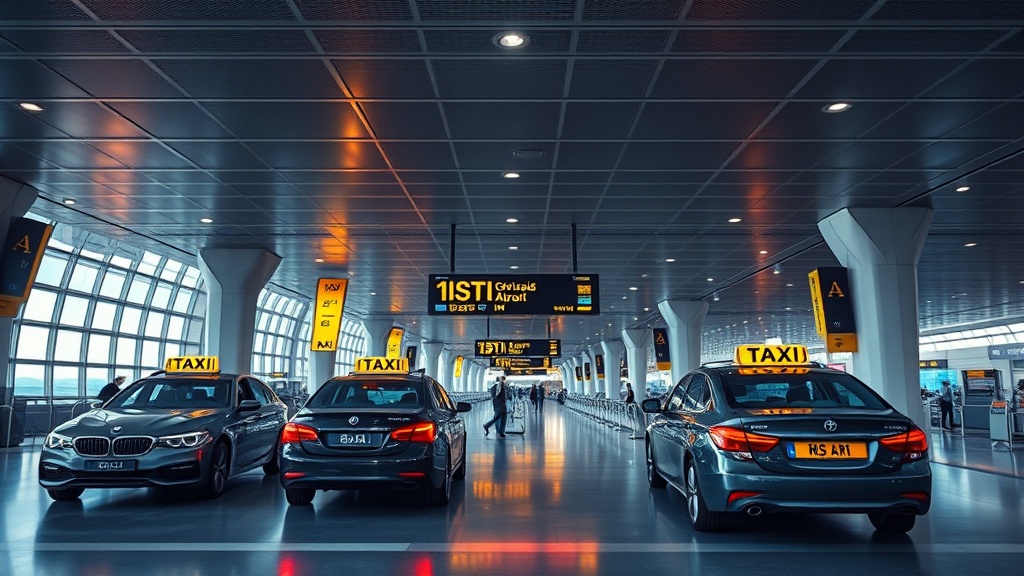
IST Taxi Scam: Official Airport Stand vs. Arrivals Level — What Every Traveler Gets Wrong
Everyone says “just take the official yellow taxi at Istanbul Airport.” They’re missing the point entirely. The real vulnerability isn’t about choosing taxis over ride-hailing apps — it’s about where inside IST you get approached, and understanding that the official-looking stand on the arrivals level is precisely where the scam begins, not where it ends.
I’ve coordinated ground transport logistics for corporate delegations flying into Istanbul Atatürk, then IST after the 2019 transition, across dozens of itineraries. The IST taxi scam exploiting the official airport stand vs. arrivals level confusion is one of the most structurally elegant cons I’ve seen at any major hub — because it uses airport infrastructure itself as the prop.
Why the “Official Stand” Narrative Creates False Security
The moment travelers hear “official stand,” their guard drops — and that’s the whole game. Istanbul Airport’s arrivals level features multiple points where individuals in semi-official attire, sometimes with lanyards or clipboards, approach passengers before they ever reach the designated taxi rank. These are not licensed operators. The actual IETT and municipality-regulated yellow taxi queue at IST is located outside the terminal building, past the arrivals hall exit doors, not inside at a kiosk or counter. Any “taxi service” desk you encounter inside the building before those exit doors is almost certainly a private transfer company charging 3x to 5x the metered rate.
The failure mode here is conflating “inside the airport” with “authorized by the airport.” Istanbul Airport is a massive 76-million-passenger facility. Third-party concession operators can legally rent counter space inside terminals. That doesn’t make them regulated taxis.
Most first-time travelers to IST — especially those arriving on overnight flights from North America or East Asia — are cognitively depleted at baggage claim. The predatory math is simple: exhausted passenger plus confident-looking person with a sign equals an easy close on a 200-euro ride that should cost 40.
The official Istanbul Municipality taxi meter rate from IST to central Taksim or Sultanahmet runs approximately 400–600 Turkish Lira depending on traffic. Any flat-rate quote in euros or dollars at the arrivals level is a structural red flag.
The Exact Mechanics of the IST Taxi Scam at the Arrivals Level
Here’s the operational sequence I’ve documented across multiple client incidents: passengers exit customs into the arrivals hall and are immediately approached by individuals offering “airport transfer” services. These individuals often carry printed rate cards that appear official, sometimes displaying logos that superficially resemble airport branding. They quote flat rates — typically 50 to 80 euros for central Istanbul — and accept card payments on mobile POS devices. The vehicle that arrives is sometimes a legitimate private car, sometimes an unlicensed vehicle. The rate, regardless, is predatory. What makes this scam particularly effective is that nothing is technically stolen — you pay, you arrive. The fraud is in the pricing architecture, not a missing service.
Under the hood, these operators exploit three specific cognitive biases simultaneously: authority bias (official-looking materials), scarcity framing (“last car available tonight”), and sunk-cost pressure (you’ve already handed over your bags).
The tradeoff is real: a legitimate metered taxi requires you to walk further, through the exit doors, past the arrivals crowd, to the exterior rank. That 200-meter walk saves you 40 to 120 euros depending on your destination. For a road-warrior doing 15+ international trips per year, that’s real money compounded across a travel year.
Most guides won’t tell you this, but: the official taxi rank at IST is deliberately positioned in a way that feels inconvenient — and that friction is exactly what the arrivals-level operators exploit. The airport’s ground transport design inadvertently creates the scam’s operating environment.
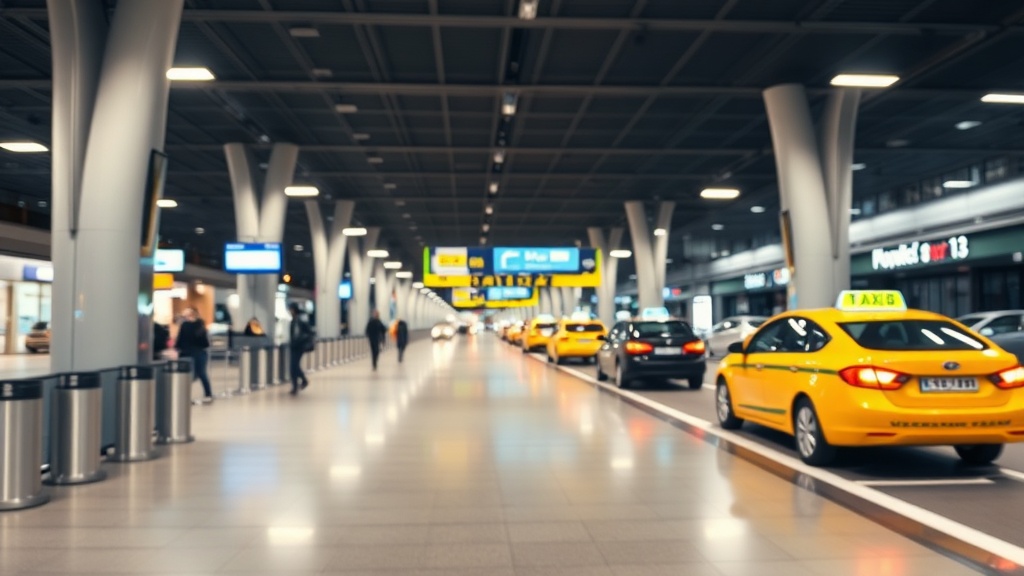
How to Identify the Legitimate Official Taxi Stand at IST
The regulated taxi rank at Istanbul Airport sits at the ground-level exterior, clearly marked with yellow signage after you exit the terminal building through the arrivals gate. All legitimate Istanbul taxis are yellow, carry a municipality plate, have a working taximeter visible to the passenger, and are required to issue a fiscal receipt. The driver must start the meter at the base rate — currently around 50 Turkish Lira flagfall — and the meter runs in Turkish Lira only. Any driver who quotes a flat rate in foreign currency before you enter the vehicle is operating outside regulated parameters, regardless of where inside or outside the terminal they are standing.
The key issue is verifying the taximeter is activated before the car moves. I’ve seen cases where drivers at the official exterior rank also attempted meter manipulation — starting on the night rate (50% surcharge) during daytime hours, or using tampered meters. Photograph the meter display when you enter.
IATA’s ground transport standards for major hub airports specify that regulated taxi services must display licensing information visibly inside the vehicle. At IST, look for the municipality license plate posted on the dashboard or sun visor — this is your verification, not the color of the car.
For frequent travelers building repeatable systems, the smarter move is pre-booking through IST’s official transfer portal or using the Havaist airport bus service (line HAV-1 to Taksim runs approximately 75 TL), which eliminates taxi exposure entirely for solo travelers with manageable luggage.
Who Gets Hit Most — And the Cost-Saving Playbook by Traveler Type
From a systems perspective, vulnerability at IST’s arrivals level correlates directly with two variables: language barrier and trip frequency. First-time visitors who don’t speak Turkish and business travelers on tight schedules (rushing to make a hotel check-in before a morning meeting) are statistically the most likely to accept the first offer they encounter. Corporate travel managers booking IST itineraries should include explicit ground transport briefings in their pre-trip documentation — not just hotel confirmation numbers. The cost differential between a scam transfer and a legitimate taxi across a team of four traveling together can exceed 300 euros on a single trip, a meaningful line item on any T&E audit.
For business travelers: pre-negotiate ground transport through your hotel concierge or a licensed transfer company with a verifiable VAT number. The hotel pick-up rate will likely be 60–80 euros — more than a metered taxi but with a paper trail and accountability.
For budget travelers and backpackers: the Havaist bus is your best-value exit. The route network from IST covers most major districts. You’ll spend under 5 euros and arrive without the anxiety of a meter dispute.
For frequent flyers who know Istanbul: download BiTaksi or iTaksi (Turkey’s regulated taxi-hailing apps) before landing. You can request a licensed yellow taxi with upfront fare estimates, driver ID, and a digital receipt. This is the system-level solution that removes human negotiation from the equation entirely.
Key Insight: “The IST taxi scam doesn’t survive scrutiny — it survives exhaustion. The traveler who books ground transport before landing, or walks 200 meters to the exterior rank, doesn’t get scammed. Full stop. The system only works on the unprepared.”
This matters because Istanbul is a tier-1 business destination with $8B+ in annual foreign direct investment flowing through it. Executives who get burned on arrival carry that negative experience into their perception of doing business in Turkey. The reputational cost to the destination goes well beyond the individual transaction.
For deeper context on building airtight ground transport systems into your travel logistics stack, the smart travel logistics frameworks I’ve developed for high-frequency corporate travelers address exactly these airport-level friction points across 40+ major hubs.
Unpopular opinion: the real problem at IST isn’t criminal taxi drivers — it’s the airport’s failure to enforce its own terminal access rules. Licensed private-hire operators should not be soliciting passengers inside the arrivals hall, full stop. Until Istanbul Airport management enforces a clean separation between its concession counters and its regulated taxi rank, traveler confusion is a structural feature, not a bug.
The travelers who avoid this entirely are the ones who made the decision before they landed — not the ones who tried to figure it out in real-time at 2 AM with two bags and a dead phone battery.
Frequently Asked Questions
Is there a genuinely official taxi booking counter inside IST arrivals?
No. Istanbul Airport does not operate an official, municipality-regulated taxi booking counter inside the terminal building. The legitimate taxi rank is outdoors, at the ground-level exterior past the arrivals exit. Any counter or desk inside the terminal offering taxi or transfer services is a private operator, not a regulated cab service — pricing will reflect that.
What’s the correct metered fare from IST to central Istanbul in 2024–2025?
As of late 2024, a metered yellow taxi from IST to Taksim Square runs approximately 400–600 Turkish Lira depending on traffic and time of day. Night rates (midnight to 6 AM) carry a 50% surcharge. Any flat-rate quote in euros significantly above these figures — especially quoted in the arrivals hall before you exit — should be declined.
Are ride-hailing apps like Uber available at IST, and are they safer?
Uber operates in Istanbul but dispatches through the BiTaksi integration — meaning you’re still getting a licensed yellow taxi, just booked through the Uber interface. BiTaksi and iTaksi are the primary regulated apps. All three provide upfront fare estimates, driver identification, and digital receipts, which structurally eliminates the main scam vectors: meter manipulation and price ambiguity. They are meaningfully safer than street-hailing or accepting an arrivals-hall approach.
What Question Should You Actually Be Asking?
Ground transport at IST is a solved problem the moment you decide to solve it before you land. The information exists, the apps exist, the bus routes exist. Every traveler who gets scammed does so because they outsourced the decision to the first person who approached them inside the terminal.
The deeper question worth sitting with: if a major international airport’s design consistently enables passenger exploitation — and the airport management knows it — at what point does passive tolerance become complicity?